Blog
When businesses need working capital quickly, decisions rarely happen in ideal conditions. They happen under pressure – payroll is due, inventory needs to be restocked, or an opportunity can’t wait.
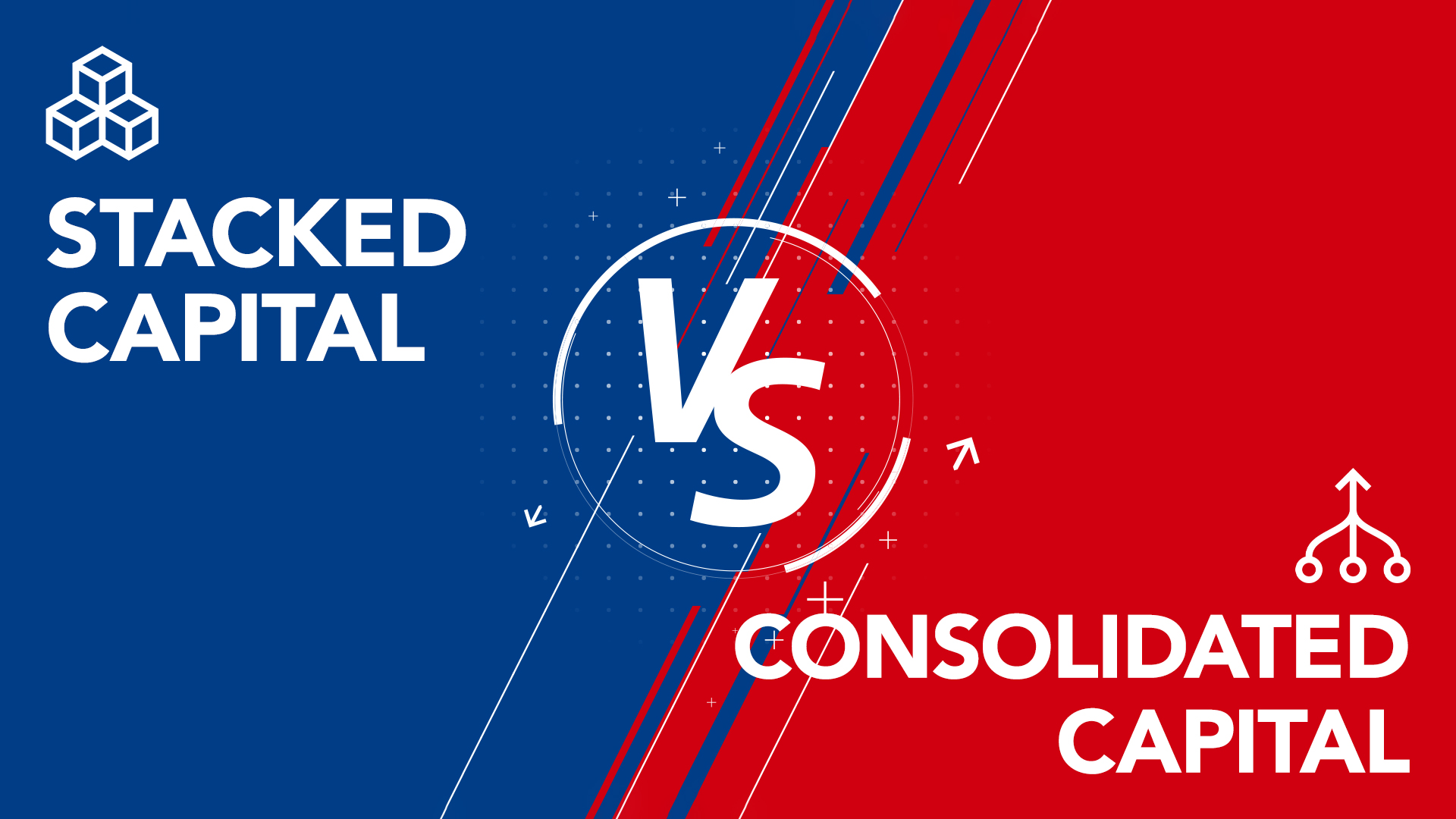
In those moments, funding decisions tend to prioritize speed over structure. That is where capital strategies begin to diverge: some businesses layer additional funding on top of existing obligations, while others restructure what they already have into a more stable framework.
Both approaches can solve an immediate need. The difference is in how that capital behaves over time.
The Mechanics of Stacked Capital
Stacked funding structures typically emerge gradually as businesses respond to shifting operational needs by layering additional capital on top of existing obligations.
How Stacked Capital Positions Develop Over Time
Stacking is the practice of securing multiple funding advances or credit facilities from different providers while existing obligations remain active. Each position is underwritten independently based on current revenue performance, often without full visibility into the borrower’s total outstanding obligations, resulting in overlapping repayment structures tied to the same cash flow base.
In most cases, stacking does not start as a deliberate strategy. It develops over time as businesses return for additional funding when new cash flow needs arise. An initial advance is typically used to cover a short-term requirement, followed by additional funding as further gaps appear. Because approvals are often fast and underwriting standards are lighter than traditional financing, new funding layers can be added before earlier obligations are fully paid.
For example:
- A business takes a $50K advance.
- Then adds a $30K facility from another provider.
- Then layers additional capital during a slower revenue period.
Each provider typically evaluates repayment based on current revenue performance, without always accounting for the full cumulative structure already in place.
Over time, this results in overlapping repayment streams against a shared revenue base, often without a consolidated view of total exposure.
The Downside of Overlapping Capital Obligations
While stacking can provide fast access to capital, overlapping obligations introduce structural friction that can intensify over time.
The primary issue is not total repayment volume, but how multiple obligations interact within the same cash flow cycle.
When different providers withdraw from the same revenue stream on separate schedules, cash flow becomes less predictable, even when sales remain stable.
This can result in:
- Reduced visibility into true available working capital.
- Increased sensitivity to short-term revenue fluctuations.
- Competing withdrawals that compress operating liquidity.
- Reduced flexibility to reinvest or respond to opportunities.
In many cases, pressure builds not from a single obligation, but from the combined structure operating simultaneously.
When Additional Funding Layers May Be Justified
Stacking can still be appropriate when it is used strategically rather than reactively.
In these cases, additional capital is tied to a defined outcome with a clear repayment source, rather than general operational strain.
Common scenarios include:
- Short-term liquidity gaps with a defined repayment path.
- Time-sensitive opportunities with measurable return potential.
- Bridge funding while awaiting receivables or larger financing events.
Here, stacking functions as a tactical tool rather than a structural dependency.
The key consideration is whether the business can support the added obligation without compromising day-to-day cash flow stability.
The Mechanics of Consolidated Capital
Consolidated funding structures are typically adopted when businesses seek to simplify and stabilize existing capital arrangements by aligning repayment obligations with underlying cash flow capacity.
The Structure Behind Consolidated Capital
Consolidation is the deliberate process of combining multiple active funding obligations into a single, unified facility. Rather than allowing obligations to remain fragmented across providers, businesses intentionally restructure existing balances into one coordinated position, typically through refinancing or formal restructuring.
This is not a passive adjustment. It is a planned financial decision aimed at realigning repayment obligations with current revenue capacity and operational reality. By replacing multiple independent repayment schedules with a single structured framework, the business regains clearer visibility into cash flow commitments and overall capital structure.
The result is a single, consolidated position designed to better reflect how the business generates and services revenue over time.
How Consolidation Restores Financial Clarity
Consolidation reduces fragmentation in the capital structure by replacing multiple overlapping obligations with a single repayment framework.
This creates a more stable financial environment where cash flow is easier to track, forecast, and manage.
Key outcomes typically include:
- One consolidated repayment stream.
- Improved visibility into cash flow availability.
- Reduced administrative complexity across providers.
- More predictable liquidity planning.
Importantly, consolidation does not eliminate obligations. It reorganizes them into a structure that better reflects how the business generates and deploys cash.
The result is improved financial clarity and operational control.
Situations That Favor Consolidation
Consolidation becomes more relevant when capital structure begins to impact clarity rather than simply providing access to funds.
This is often visible in how cash flow functions in practice.
Common indicators include:
- Multiple withdrawals impacting revenue on different schedules.
- Difficulty tracking total repayment obligations across providers.
- New funding used to manage or support existing obligations rather than fund growth.
At this stage, the issue is no longer access to capital. It is structure.
Even strong revenue performance can feel constrained when obligations are fragmented across multiple facilities.
Evaluating the Right Capital Approach
Determining whether stacking or consolidation is appropriate requires more than comparing cost or speed. It comes down to how existing obligations interact with cash flow and whether the current structure supports or constrains operations.
Liquidity Speed vs. Capital Structure
At its core, the difference between stacking and consolidation comes down to priorities.
Stacking is driven by liquidity speed, how quickly capital can be accessed when timing is critical. It prioritizes immediate funding availability, often with minimal friction.
Consolidation is driven by capital structure, how effectively obligations are organized relative to cash flow capacity. It prioritizes stability, predictability, and long-term manageability.
The tradeoff is clear:
- Stacking: faster access to liquidity but increasing structural complexity
- Consolidation: slower execution but improved financial control and visibility
Neither is inherently better. It depends on whether the business is solving a short-term constraint or addressing a structural imbalance.
A Framework for Decision-Making
A practical way to evaluate the appropriate approach is to step back from funding itself and assess structure and capacity.
- Is the capital need temporary or recurring?
Temporary, opportunity-driven needs may justify stacking. Ongoing pressure typically signals a structural issue better addressed through consolidation. - Can current cash flow support additional overlapping obligations without restricting operations?
If yes, stacking may be manageable in the short term. If no, consolidation is generally more appropriate. - Is visibility into total obligations still clear and manageable?
If tracking becomes fragmented, consolidation can restore control and improve financial oversight.
This framework is not about limiting access to capital. It is about ensuring capital structure aligns with operational reality.
Final Considerations on Capital Structure
Stacking and consolidation represent two distinct responses to capital needs.
Stacking prioritizes speed and immediate liquidity. It is typically reactive and used when timing constraints outweigh structural considerations.
Consolidation prioritizes structure, predictability, and financial clarity. It is used when multiple obligations begin to impact cash flow efficiency and operational visibility.
The most effective capital strategies are not defined by how quickly funding can be accessed, but by how sustainably that funding integrates into the broader financial structure of the business.
When capital becomes fragmented across multiple positions, consolidation is often what restores order, clarity, and long-term control.
The CapFront Perspective
At CapFront, capital decisions are viewed through the lens of structure, not just access. Many businesses do not need more funding options. They need a clearer view of how existing obligations are impacting cash flow.
Whether layering capital or restructuring it, the goal is the same: aligning funding structure with operational reality. When that alignment breaks down, visibility, flexibility, and planning become harder to maintain.
CapFront helps businesses evaluate both sides of that equation to determine when additional liquidity makes sense and when consolidation may be the more sustainable path forward.
See your offers, compared for you
Free to apply · No credit impact · Funding from $5K to $25M
 Spanish
  English